Blog · 27 October 2026
Microblading, nanoblading or powder brows?
Three of the most requested brow treatments, three different techniques. Here's how they compare, and what that means for your training.
Brows are the backbone of most semi-permanent makeup businesses. Clients want fuller, better-shaped brows that look good from the moment they wake up, and they come back for colour boosts every year or so. But “semi-permanent brows” covers several different techniques, and the names can be confusing. Microblading, nanoblading and powder brows all place pigment in the skin, yet they create very different looks. Here’s how they compare, and how to decide which to learn first.
Microblading
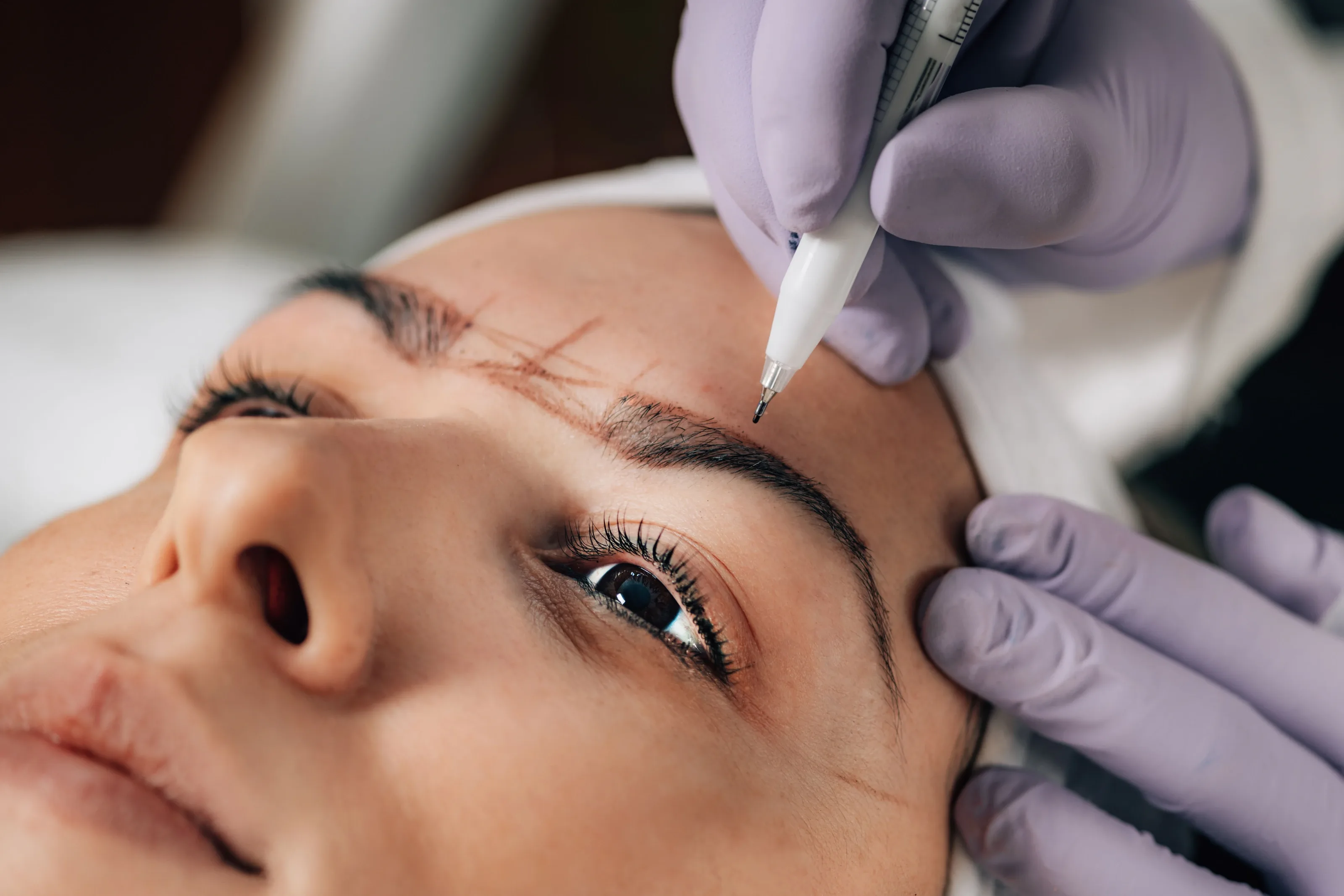
Microblading is a manual technique. The artist uses a handheld tool with a row of fine blades to cut tiny, shallow lines into the skin and deposit pigment, drawing individual hair strokes one by one.
The look: natural, hair-like strokes that blend with the client’s own brows. It’s ideal for clients who want to fill gaps or add definition without looking “done”.
Who it suits: clients with normal to dry skin and some natural brow hair. On very oily skin, strokes can blur and soften faster as they heal.
What it’s like to learn: microblading rewards a steady hand and a good eye for shape. Most artists start here because it teaches the fundamentals of brow mapping, symmetry and stroke direction. The NB1 Microblading course covers it in two days, and the VTCT Level 4 Microblading course over six.
Nanoblading
Nanoblading is a refinement of microblading. Instead of a row of blades, the artist uses an ultra-fine single blade or needle to create even thinner strokes.
The look: extremely fine, crisp hair strokes that can look even more realistic than standard microblading, particularly on clients with fine natural brow hair.
Who it suits: clients who want the most natural, hair-by-hair finish, and those with fine features.
What it’s like to learn: nanoblading needs precision, so it’s often taught alongside or after microblading. The NB2 EMBO and Korean Nanoblading course is a five-day course focused on this technique, with practice on six live models.
Powder brows
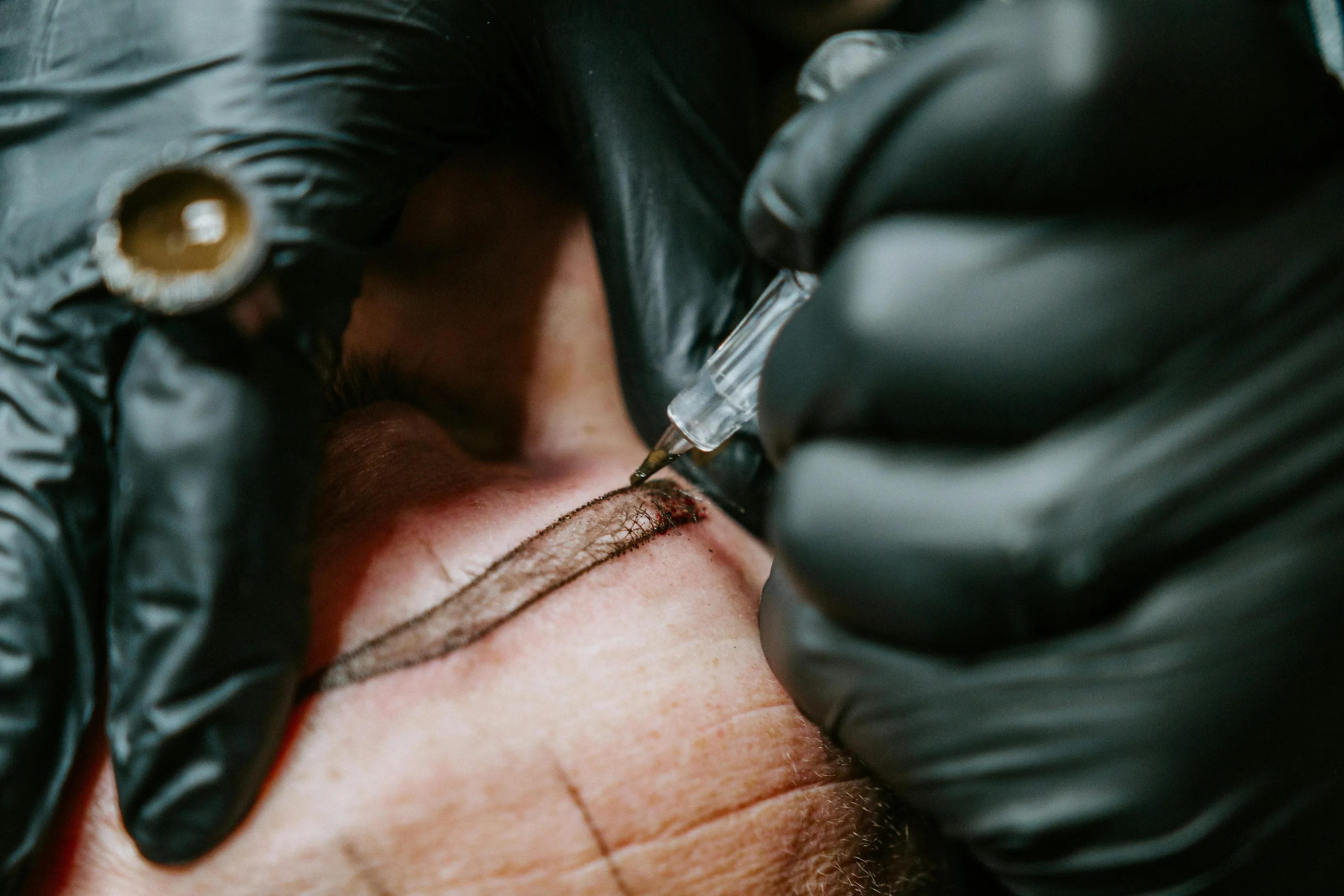
Powder brows, also called ombre or shaded brows, are created with a machine rather than a blade. The machine deposits tiny dots of pigment to build up a soft, shaded effect, usually lighter at the front of the brow and deeper towards the tail.
The look: a soft, filled-in finish, similar to wearing brow powder or pencil. It can be kept subtle or built up for more definition.
Who it suits: clients who like the look of brow makeup, and clients with oily or mature skin, where shading often holds up better than strokes.
What it’s like to learn: machine work is a different skill from blading. You need to control depth, speed and needle angle, and build colour gradually. The NB5 EMBO Micropigmentation course teaches ombre, shading and powder brows over three days, and the VTCT Level 4 Micropigmentation course covers brows, eyeliner and lip blush.
Combination brows
Many artists combine techniques: hair strokes at the front of the brow for a natural start, with soft shading through the body and tail. Once you’ve learned both blading and machine work, combination brows let you tailor every treatment to the client in front of you.
Which should you learn first?
There’s no single right answer, but a few questions help:
- Do you want a regulated qualification? VTCT Level 4 courses lead to a nationally recognised qualification and take longer. Fast-track courses get you started sooner with a CPD certificate.
- Who are your clients likely to be? If you expect lots of clients with oily skin, or clients who love a made-up brow, machine work will be in demand. If your clients want the most natural look, blading techniques will be.
- How do you like to work? Some artists love the control of hand-drawn strokes. Others prefer the consistency of a machine.
Many artists start with microblading to learn brow design and stroke work, then add machine shading so they can offer every client the right result.
Practice is everything
Whichever technique you choose, your first course is only the start. Practise on latex skins, then on models, before taking paying clients. Photograph every treatment, healed results included, to build your portfolio and track your progress.
Ready to choose?
Every course mentioned here is taught by LV College in London and Manchester. Open a course on our home page for full details, or send a WhatsApp message to ask which technique suits your goals.
Ready to start your SPMU career?
Book a course with LV College, or send a WhatsApp message to ask about dates, models and payment plans.